Where Did 10,000 Steps Even Come From? The Real Story Behind Your Tracker's Favorite Number
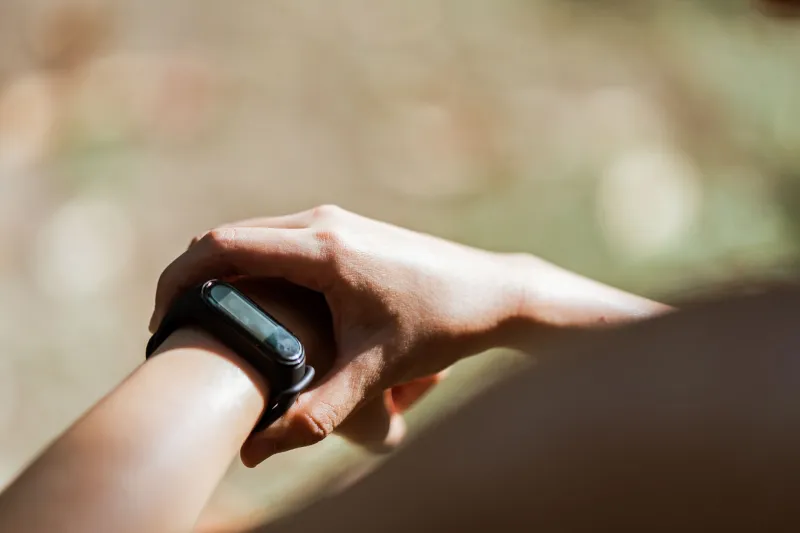
If you've ever glanced down at your watch at 9 p.m., seen 7,843 steps staring back at you, and felt a vague wave of failure — this one's for you.
The 10,000-step goal has become the unofficial gold standard of American fitness culture. It's on billboards, corporate wellness challenges, and every step-tracker app default setting. But here's the thing almost nobody mentions: the number wasn't based on science at all. It was based on marketing.
A Pedometer Ad From 1965 Walked So Your Fitness Tracker Could Run
The story starts in Japan in the mid-1960s, when a company called Yamasa Tokei launched a pedometer called the "manpo-kei" — which roughly translates to "10,000-step meter." The number was chosen largely because the Japanese character for 10,000 (万) happens to look something like a person walking. It was catchy. It was memorable. It sold devices.
What it wasn't was evidence-based. There was no clinical trial behind it, no peer-reviewed study, no physiologist crunching numbers. It was a slogan that happened to stick around for six decades and eventually burrowed its way into every piece of wearable tech sold in the U.S.
The irony? Modern research suggests the actual health benefits of walking follow more of a curve than a cliff. A large 2021 study published in JAMA Network Open found that adults who walked around 7,000 steps a day had significantly lower mortality risk than those logging fewer — and benefits continued to climb, but gradually, with diminishing returns well before 10,000. In other words: 10,000 isn't a magic threshold. It's just a number.
When a Step Goal Backfires
Here's where the tracker becomes a problem rather than a tool. For some people, chasing an arbitrary daily quota turns movement into a chore — something to grind through, check off, and quietly resent. A few common ways that plays out:
- The all-or-nothing spiral. Miss the number two days in a row, and the whole habit falls apart. If you can't hit 10,000, why bother hitting anything?
- The injury tax. Suddenly jumping from 3,000 to 10,000 daily steps is a big load increase for knees, hips, and feet that aren't ready for it.
- The vanity metric trap. Steps measure quantity, not quality. A slow, distracted shuffle to hit a number isn't doing what a brisk 20-minute walk does for your heart, your mood, or your calorie burn.
If your step goal has become a source of stress instead of motivation, that's not a willpower problem. It's a design flaw.
What Actually Works: Intensity Over Quantity
If there's one idea worth stealing from the research, it's this: how you move matters more than hitting a specific count. A shorter, brisker walk — the kind where you can talk but would rather sing — delivers outsized benefits compared to the same distance wandered at a strolling pace.
A few science-backed swaps:
1. Trade the quota for a rhythm. Instead of 10,000 steps every day, aim for three brisk 10-minute walks spread across your day. Morning, lunch break, after dinner. It's easier to schedule, easier to recover from, and it adds movement snacks to your metabolism throughout the day rather than one big block.
2. Stack movement onto habits you already have. Behavioral researchers call this habit stacking, and it's the reason some people effortlessly stay active while others white-knuckle it. Walk during phone calls. Take the stairs at the office as a standing rule, not a decision. Park at the far end of the Kroger lot on purpose. When movement attaches to something you already do, you don't need motivation — the cue does the work.
3. Pick a number that's yours. If your current average is 4,000 steps, aiming for 6,000 is a real, meaningful jump — and one you can actually sustain. Research consistently shows the biggest health gains come from moving more than you did before, not from crossing an arbitrary line.
4. Add resistance somewhere. Walking is wonderful, but pairing it with even two short strength sessions a week preserves muscle while you lose fat — which keeps your metabolism and your mobility in better shape long-term.
Movement You Enjoy Beats Movement You Endure
The deeper issue with the 10,000-step myth isn't the number itself — it's the mindset it creates. When fitness becomes a daily quota, every walk feels like homework. And nobody sticks with homework for decades.
The people who maintain an active lifestyle long-term aren't the ones with the strictest trackers. They're the ones who found something they don't hate: a walking group that doubles as social hour, a Saturday hike at the local state park, dancing in the kitchen while dinner's in the oven. Enjoyment is a better predictor of consistency than any goal-setting framework.
So check your step count if you like — data can be useful. But treat it as a gentle nudge, not a report card. If you hit 7,000 today and it was a good day, that's a win. If tomorrow you take a fast, sweaty 20-minute walk and only log 4,500 steps, that might be an even bigger win.
The number on your wrist is a suggestion from 1965. What you do with your body — and whether you'll keep doing it next month — is entirely up to you.