Your Countertops Are Voting on Your Dinner Before You Do
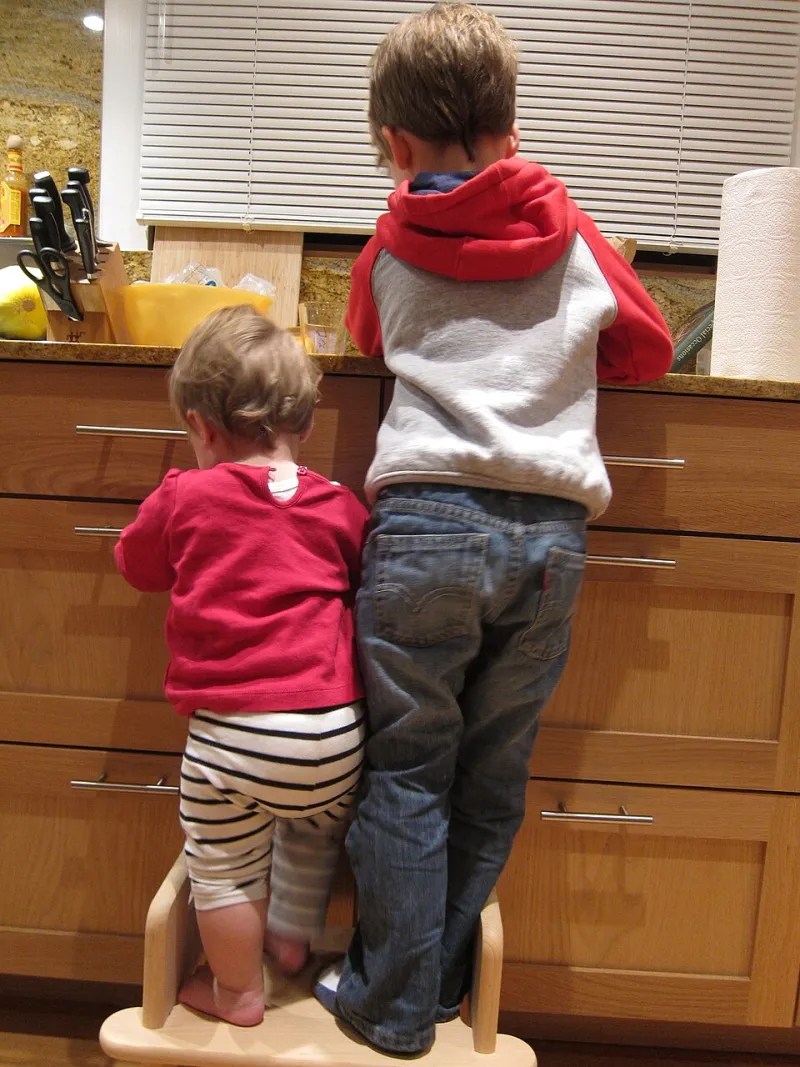
Photo: Lars Plougmann, CC BY-SA 2.0, via Wikimedia Commons
You don't decide what to eat at 6:47 p.m. The real decision was made around 9 a.m., when you walked past the counter on the way out the door and the bag of pretzels was the only thing looking back at you.
That's not a character flaw. It's how attention works. The food you see is the food you're most likely to eat, and the food you have to hunt for, climb for, or unwrap from three layers of packaging is the food that quietly stops existing. Willpower gets all the credit and none of the blame, but the room usually calls the play.
The 12-inch rule, in one sentence
Whatever sits within roughly 12 inches of where you stand — the stretch of counter by the coffee maker, the front row of the fridge shelf, the top of the pantry — is what you'll eat. Everything past that requires a decision. So put the stuff you want to eat more of inside that 12-inch zone, and give the rest a little distance.
That's it. No calorie counting, no moralizing, no cabinet full of things you bought in a burst of optimism and will throw out in March.
Why the kitchen outvotes your willpower
Behavioral research on food visibility and convenience has repeatedly found that proximity and ease predict intake — the closer and easier a food is, the more of it gets eaten, often without people registering the choice at all. Some of the most famous studies in this area have been criticized in recent years, and it's fair to treat any single finding with skepticism. But the underlying pattern shows up across decades of work and across plenty of ordinary kitchens: we eat what's in front of us.
There's also the fatigue problem. By 6 p.m. you've made hundreds of small decisions, and the part of your brain that weighs consequences is running on fumes. The last thing it wants is a debate. It wants the path of least resistance, and whatever is already on the counter is that path.
Start with a 15-minute audit
Before you move anything, take a photo of your counter, the door shelves of your fridge, and the eye-level shelf in your pantry. Then list what's there. Most people find the same pattern: snacks on the counter, condiments at eye level, and the good stuff buried behind a wall of jars.
Sort what you find into three piles in your head: everyday food, sometimes food, and decoration. The decoration stays. Everything else gets a home based on how often you want to reach for it.
The reset, shelf by shelf
The counter
Clear the cereal boxes, the chip clips, and the stack of mail. Then put one bowl with three or four pieces of whole fruit where you'll actually see it — not a giant cornucopia that turns brown by Thursday. A cutting board and a knife left out are a quiet nudge toward cooking. A bowl of oatmeal packets next to the coffee maker beats a bowl of cookies next to the coffee maker, and it doesn't require you to be a different person.
The fridge door and top shelf
This is prime real estate and it's usually occupied by salad dressing. Move the dressings and sauces to the bottom shelf or the back, and put the things you'd be happy to grab at eye level: cut vegetables in clear containers, Greek yogurt cups, string cheese, hard-boiled eggs, leftover chicken you actually want to eat. Leftovers go in the front, labeled with the day you made them, in clear containers — if you can't see it, it becomes science experiment material.
The pantry
Chips, cookies, and crackers can stay. This isn't a morality test. Just give them a little friction: an opaque bin on a high shelf, still in the house, no longer the first thing you see. The stuff you want to reach for more — rice, beans, oats, canned fish, nuts in a portioned container — comes down to eye level.
The landing zone
Pick one small plate or bowl as the official snack vessel and leave it out. Eating from a plate rather than a bag is a tiny speed bump that turns grazing into a decision.
A realistic before-and-after
Picture a household with two working parents, two kids, and a dog. Before: a counter crowded with three kinds of cereal, a bag of tortilla chips held shut with a binder clip, and a fruit bowl of bananas that were all going brown at the same time. Fridge door: eleven condiments and a lonely bag of carrots. Result: chips and cereal win by default, produce dies in the crisper, and everyone feels vaguely bad about it.
After: cereal lives in a cabinet, in a bin. The chips live in the same cabinet, one shelf higher, in an opaque container. The counter holds a small bowl of apples and a cutting board. The fridge door holds pre-cut carrots, cucumber, and bell pepper in clear containers, plus yogurt and cheese sticks. The crisper holds a bag of frozen mango and backup vegetables instead of a science project.
The change isn't dramatic. That's the point. Nobody in that house has to become disciplined. They just have to walk into a kitchen that argues for them.
The 20-minute Saturday reset
- Clear the counter completely, then put back only what earns its space.
- Wash and cut whatever produce you actually bought. Skip the rest.
- Move condiments to the bottom shelf and door-bottom.
- Transfer leftovers to clear containers and put them front and center.
- Give snacks a friction spot: high shelf, opaque bin.
- Stock one eye-level shelf with grab-and-go protein and produce.
- Put a small fruit bowl out.
- Take an after photo. It's more motivating than it sounds.
Three ways this backfires
Buying produce you won't prep. A crisper full of whole beets is decoration. Buy pre-cut, frozen, or nothing at all.
Making the kitchen feel like a punishment. If every visible food is virtuous and everything enjoyable is locked on a high shelf, the system gets abandoned — or raided at 10 p.m. Keep the cookies. Just move them.
Ignoring the rest of the household. Give kids a shelf at their height with options you're fine with and let them choose. Autonomy beats smuggling, and household pushback kills more of these resets than hunger ever does.
Your counter is going to influence your dinner either way. The only question is whether that influence was chosen on purpose.